What happend to Kodachrome

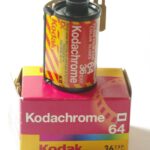
Kodachrome was once the king of color photography. Introduced by Eastman Kodak Company in 1935, it became famous for rich colors, sharp detail, and long-lasting images. National Geographic photographers and generations of families used it for vacations, magazines, and slideshows.

Its downfall came from changing technology and economics. Kodachrome used a very complex developing process called K-14 that required specialized labs and chemicals. As digital photography exploded in the late 1990s and 2000s, fewer people shot film, and Kodak could no longer justify maintaining the expensive processing system.

Photographers also shifted toward easier slide films like Fujifilm Velvia and eventually to digital cameras. Kodak stopped making Kodachrome in 2009. The last roll was processed in 2010 at Dwayne’s Photo in Kansas, ending a 75-year era. Many old Kodachrome slides still look remarkably good today because the film was unusually stable and fade-resistant.

What Made Kodachrome Special

Kodachrome stood apart from every other color film ever made. Introduced in 1935 by Eastman Kodak, it was a color reversal film, meaning it produced positive images—slides—rather than negatives. These slides could be projected directly, creating bright, luminous images that seemed to glow from within. What truly set Kodachrome apart was its color rendering. Reds were deep and vibrant, blues were rich without being overpowering, and skin tones looked natural and lifelike.

Unlike later films, Kodachrome did not have color dyes built into the emulsion. Instead, the dyes were added during development through a complex chemical process. This resulted in extremely fine grain and exceptional sharpness. Photographers loved it for its clarity and its ability to hold detail, even in challenging lighting conditions. It became the go-to film for professionals, including National Geographic photographers, who relied on its consistency and archival stability. Properly stored Kodachrome slides can still look stunning today, decades after they were shot, a testament to its unmatched longevity.

The Legacy of Kodachrome

Kodachrome’s influence continues to shape photography today, even though the film itself is gone. Its distinctive color palette—warm, balanced, and slightly nostalgic—has inspired countless digital presets and film simulations. Photographers still chase the “Kodachrome look,” trying to recreate its depth and realism through modern tools.

More importantly, Kodachrome represents a different mindset. Shooting it required discipline. With limited exposures and no instant feedback, photographers had to slow down, compose carefully, and trust their instincts. Each frame mattered. That approach stands in contrast to today’s high-volume digital shooting, where images are often taken in rapid bursts and reviewed instantly.

For many, Kodachrome is more than a film—it is a symbol of craftsmanship and intentional photography. Its images documented history, from everyday family moments to world-changing events, with a clarity and permanence that still resonates. While the chemistry is gone, the lessons remain: slow down, pay attention to light, and create images that are meant to last.

Kodachrome: A Color That Defined an Era

Kodachrome wasn’t just film—it was a way of seeing the world. For decades, it captured life in rich, glowing color that felt more real than reality itself. From family slide shows to iconic magazine spreads, Kodachrome shaped how we remember the 20th century. Its look was unmistakable, its process legendary, and its disappearance marked the end of something photography has never fully replaced.

Film is the original image-making medium

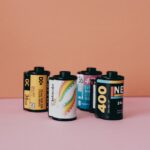
Film is the original image-making medium in photography. Before digital cameras stored pictures on memory cards, cameras used light-sensitive film to capture an image. When you press the shutter, light passes through the lens and strikes the film, creating a hidden image that is later revealed through developing.

There are two main types of film: black-and-white and color. Black-and-white film records a scene in tones of black, white, and gray. It is often valued for its timeless feel, strong contrast, and emphasis on shape, light, and texture. Color film records the world in color and can produce a wide range of looks, from soft and muted to bright and vivid, depending on the film stock.

Film also comes in different sizes, with 35mm being the most common for everyday photography. Medium format film is larger and can produce greater detail. Many photographers still love film because it slows the process down. Each frame matters. You think more carefully about composition, exposure, and timing.

Film photography has a physical, hands-on quality that many people find rewarding. It connects today’s photographers to the roots of the craft while producing images with a distinctive character that digital often imitates but never fully replaces.

Depth of field

Depth of field is the zone in a photo that appears acceptably sharp from front

An Ultimate Guide to Depth of Field in Photography

to back. It controls how much of the scene is in focus and is one of the main tools photographers use to guide attention. A shallow depth of field means only a small part of the image is sharp, while the background and foreground blur softly. This is common in portraits, flower photos, and wildlife shots where you want the subject to stand out. A deep depth of field keeps much more of the scene sharp, which is useful for landscapes, architecture, and travel images.

Learn About Depth of Field in Photography: The Ultimate Guide - 2026 - MasterClass

Three main things affect depth of field: aperture, distance, and focal length. A wide aperture such as f/2.8 creates less depth of field. A smaller aperture such as f/11 creates more. The closer you are to your subject, the shallower the depth of field becomes. Longer lenses also tend to blur backgrounds more.

What Is Depth of Field: Exploring Visual Storytelling Through Focal Length and Aperture | Envato ...

In simple terms, depth of field is not just about focus. It is about deciding what matters most in the frame and letting the viewer see it first.

Back to cameras so what is “Shutter speed”

Shutter speed is the amount of time your camera’s shutter stays open when you take a photo. It controls two things: motion and brightness. A fast shutter speed (like 1/500 or 1/1000) freezes movement—great for birds, sports, or kids. A slow shutter speed (like 1/30, 1/10, or 1 second) lets motion blur—useful for silky waterfalls, light trails, or creative blur.

It also affects exposure: slower shutter speeds let in more light and make the photo brighter; faster shutter speeds let in less light and make the photo darker.

Handheld rule of thumb: use about 1 divided by your focal length (50mm ≈ 1/50, 200mm ≈ 1/200) to avoid camera shake, unless you have stabilization.

“Remember When” Digital Images with a IBM PC 286 or was it 386 ?

In the late 1980s and early 1990s, digital images on personal computers were more promise than practicality. The IBM PC 286 was a capable machine for its time—reliable, business-oriented, and widespread—but it simply wasn’t built for serious graphics. Memory addressing was limited, storage was slow, and graphics modes were primitive by modern standards.

https://upload.wikimedia.org/wikipedia/commons/thumb/6/69/IBM_PC_AT.jpg/250px-IBM_PC_AT.jpg

Early image work on a 286 meant crude tools: DOS paint programs, monochrome or 16-color VGA, and files small enough to fit on floppy disks. Scanning a photo could take several minutes, and every operation felt risky. Crashes were common, and undo functions were minimal or nonexistent. You learned quickly that mistakes were expensive.

The real turning point came with the 386 processor. It introduced protected mode and expanded memory addressing, which made more advanced software possible. When Photoshop 1.0 appeared in 1990, it required a 386—not because Adobe wanted to exclude users, but because the math and memory demands simply couldn’t run on a 286. Even then, performance was slow unless you had what felt like extravagant hardware: multiple megabytes of RAM and a fast hard drive.

By modern standards, those systems were painfully limited. Yet those limits shaped habits. Editing was deliberate. Cropping, contrast, and retouching were planned before execution. There was no casual experimentation, no infinite undo stack, no layers to bail you out later.

https://www.dosdays.co.uk/computers/IBM%20PC-XT-286%20%285162%29/images/ibmpcxt_5160.jpg

That early digital era bridged film and pixels. It was awkward, slow, and fragile—but it laid the groundwork for everything that followed. Today’s effortless image editing rests on lessons learned when every click mattered and every saved file felt like a small victory.

F-stops

An f-stop is the setting on a camera lens that controls how wide the aperture opens. The aperture is the hole inside the lens that lets light reach the camera’s sensor. F-stops are written as numbers like f/2, f/4, f/8, and f/16. Here’s the counter-intuitive part: smaller numbers mean a wider opening, and larger numbers mean a smaller opening.

Each full f-stop change either doubles or halves the amount of light entering the camera. Going from f/4 to f/2 lets in twice as much light. Going from f/4 to f/8 cuts the light in half. This predictable pattern is why f-stops matter so much in exposure.

F-stops also control depth of field, which is how much of the scene appears sharp from front to back. Wide apertures (low f-numbers) create shallow depth of field, blurring backgrounds and isolating subjects. Narrow apertures (high f-numbers) increase depth of field, keeping more of the scene in focus.

In practice, you choose an f-stop based on creative intent first, then adjust shutter speed and ISO to balance exposure. Portraits often favor wide apertures for soft backgrounds, while landscapes usually need smaller apertures for overall sharpness and clarity.

What is a TLR ?

A TLR (Twin-Lens Reflex) camera is a classic film camera design that uses two lenses stacked vertically. The top lens is used for viewing and focusing, while the bottom lens captures the photograph. Both lenses are mechanically linked, so when the image appears sharp in the viewfinder, the photo will also be in focus. TLR cameras are typically used with medium-format 120 film, producing large negatives known for excellent detail, smooth tones, and rich image quality.TLR

Photographers compose images by looking down into a waist-level viewfinder, which shows a bright but laterally reversed image. This encourages slower, more deliberate composition and thoughtful framing. Most TLR cameras are fully mechanical, requiring no batteries, and are valued for their quiet shutters, reliability, and solid build quality. Popular models include Rolleiflex, Yashica Mat, and Minolta Autocord.

TLR cameras remain popular with film enthusiasts and fine-art photographers who enjoy hands-on operation, classic craftsmanship, and a slower, more intentional approach to photography.

https://cdn.assets.lomography.com/3a/65e5c53c440dd9210815450aa58337c8b6313b/698x697x2.jpg?auth=745b4673666ee69e59d7ef13b8eade39705e01fd